Credits
Newman's Silence: A Composer Who Knows When Not to Play
Thomas Newman's scoring approach across American Beauty, Road to Perdition and Jarhead — the first three Mendes films, all of which he scored — and the specific argument his Jarhead score makes by treating long silences and ambient desert sound as musical material.
When the Desert Itself Is the Score
Thomas Newman scored all three of Sam Mendes's first three features — American Beauty (1999), Road to Perdition (2002), and Jarhead (2005) — and the evolution across them is less a matter of style than of restraint. Each score is more distinct from the last, and Jarhead pulls back furthest. By Jarhead, the silence itself has become compositional material.
Newman's signature had always been rhythmic minimalism: struck percussion, static harmonics, phrases that circle rather than resolve. American Beauty made that signature famous, its xylophone-and-strings palette threading suburban dread through a major-key surface. Road to Perdition pushed toward something grander — strings carrying genuine grief across Thomas Newman's most conventionally emotional work for Mendes. Jarhead moves in the opposite direction entirely.
 05
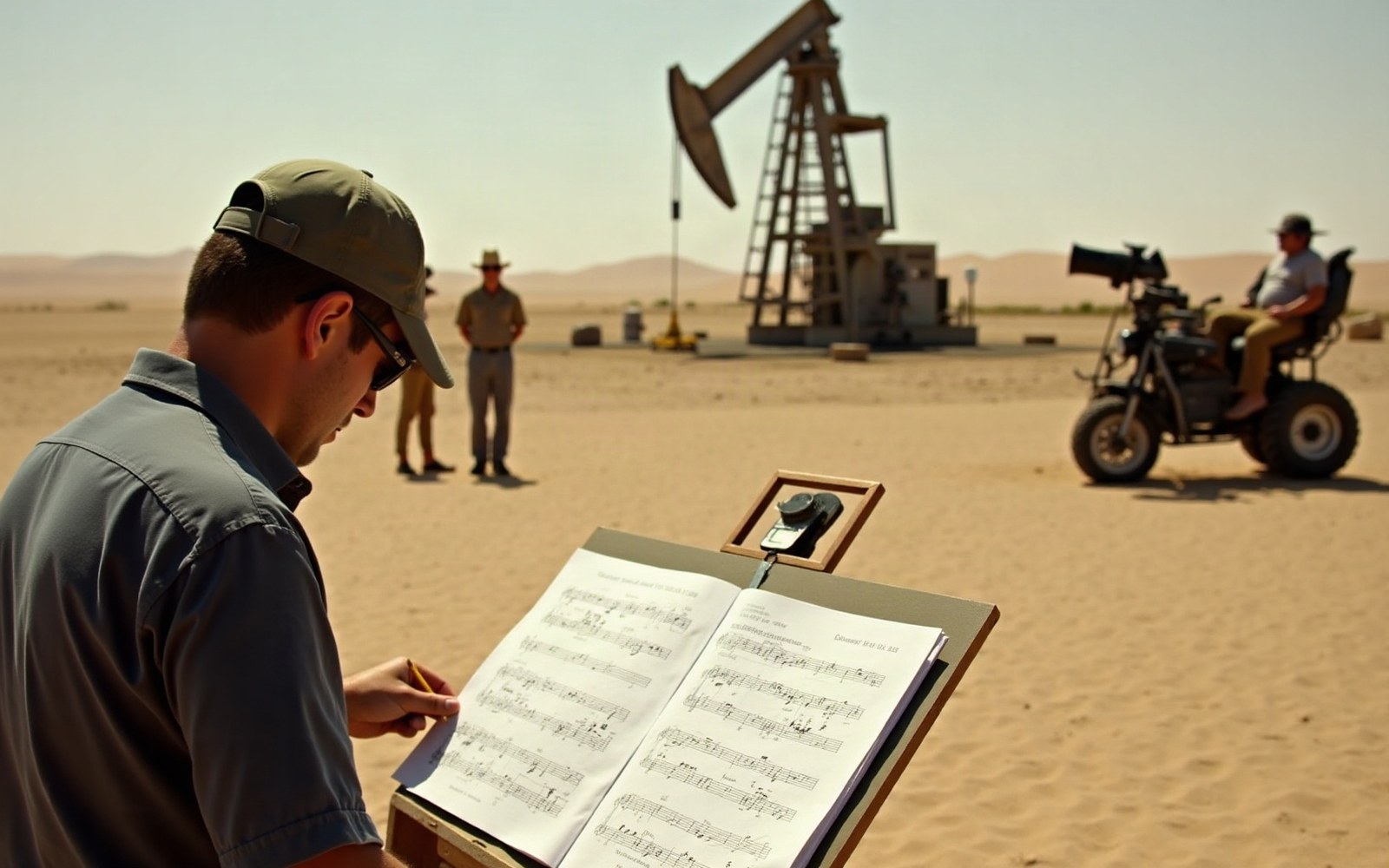
05The Jarhead score is built around the film's central dramatic problem: nothing happens for most of the running time, and the music must honour that fact rather than paper over it. Newman treats ambient desert sound — wind across sand, the low-frequency rumble of distant ordnance, the creak of equipment — as sonic architecture, composing around and into it rather than beneath it. Passages that another composer might score with mounting tension are left open. The Gulf just breathes.
When Newman does write themes, they are spare to the point of austerity. A few struck notes, a held tone. The Kuwaiti oil-fire sequences, which could easily invite an orchestral climax, receive something closer to a drone — the music registering awe without melodrama, because melodrama would be dishonest to the experience Swofford describes in his memoir.
This was a deliberate collaboration with Mendes, who wanted the score to refuse the emotional cues that war films habitually provide. The result is a score that functions as negative space, defining mood by what it withholds. Newman had spent years learning when to play. Jarhead is the film where he learned when to stop.