Credits
4 November 2005: The Release Record, the Gross, and the Award Nominations
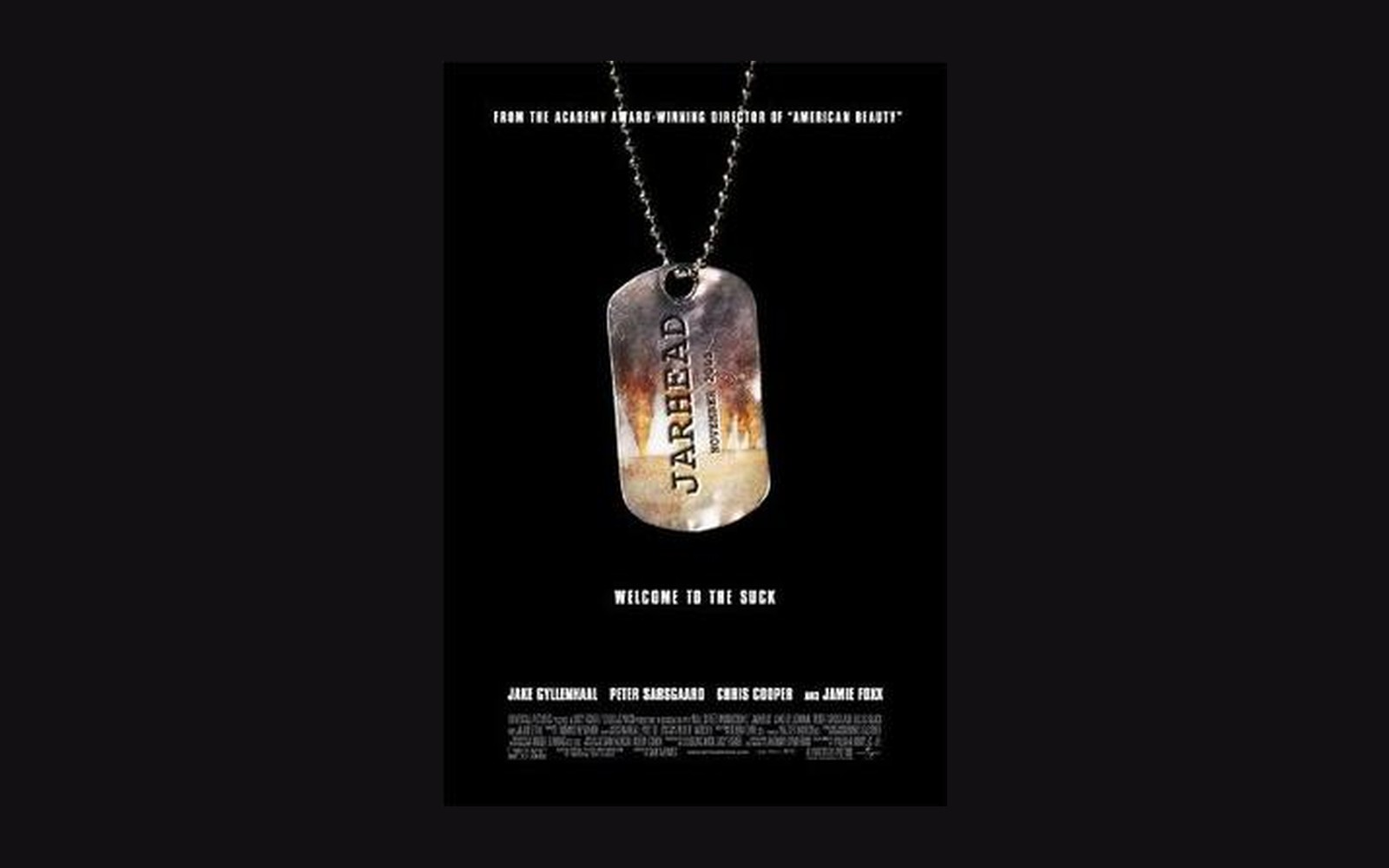
Jarhead opened in North American cinemas on 4 November 2005, earned $27.7 million in its opening weekend, and went on to gross approximately $97 million worldwide — a figure recorded by Box Office Mojo.
The Numbers and Their Context
Universal Pictures released the film wide across North America on 4 November 2005, placing it squarely in the awards-season corridor between the summer blockbusters and the December prestige surge. The opening weekend figure of $28.7 million put it at the top of the domestic box office that frame, a strong debut for a film without a conventional action architecture — Jarhead has no clear antagonist, no climactic firefight, no cathartic resolution. What it had was a recognisable star in Jake Gyllenhaal, a director whose debut feature had won the Academy Award for Best Picture, and a subject — the 1991 Gulf War — that had returned to public consciousness in the context of a second American ground campaign in Iraq.
The domestic total settled at around $62.5 million; international markets added the remainder to reach the $97 million global gross. For a film whose entire dramatic premise is that nothing happens — a Marine sniper-scout trained for a shot he never fires — the commercial performance was quietly remarkable.
 03
03Critical Reception and Formal Recognition
The critical response on release was divided in a way that itself reflected the film's central argument. Reviewers who expected a conventional war picture were frustrated by the deliberate absence of combat payoff; those who read the film as an interior study of masculine conditioning and institutional psychology found it precise and unusually honest. Roger Ebert, writing in November 2005, reviewed the film positively, registering it as a serious work rather than a genre entry.
The American Film Institute included Jarhead in its Movies of the Year selection for 2005 — a recognition given to ten films annually that the AFI considers culturally significant. BAFTA nominated Roger Deakins for the BAFTA Film Award for Best Cinematography at the 2006 ceremony, an acknowledgement of what the anamorphic desert photography and the sustained engagement with the Kuwaiti oil-fire landscapes had achieved on screen. The nomination placed Deakins alongside work across a strong year for cinematography; he did not win.
No Academy Award nominations followed, a fact that surprised some observers given the film's production values and pedigree. Thomas Newman's score, Dennis Gassner's production design, and Walter Murch's editing — all contributions from collaborators with prior Oscar recognition — went unrecognised in that cycle. The film's awards footprint was, in the end, modest relative to its craft ambitions, leaving its reputation to be built more slowly, through the durability of individual sequences rather than ceremony hardware.