Stills
Oil Rain on a Marching Column: How That Shot Was Made
The night march under burning oil is Jarhead's most visceral image — and one of its most precisely engineered.
Making the Rain Fall Right
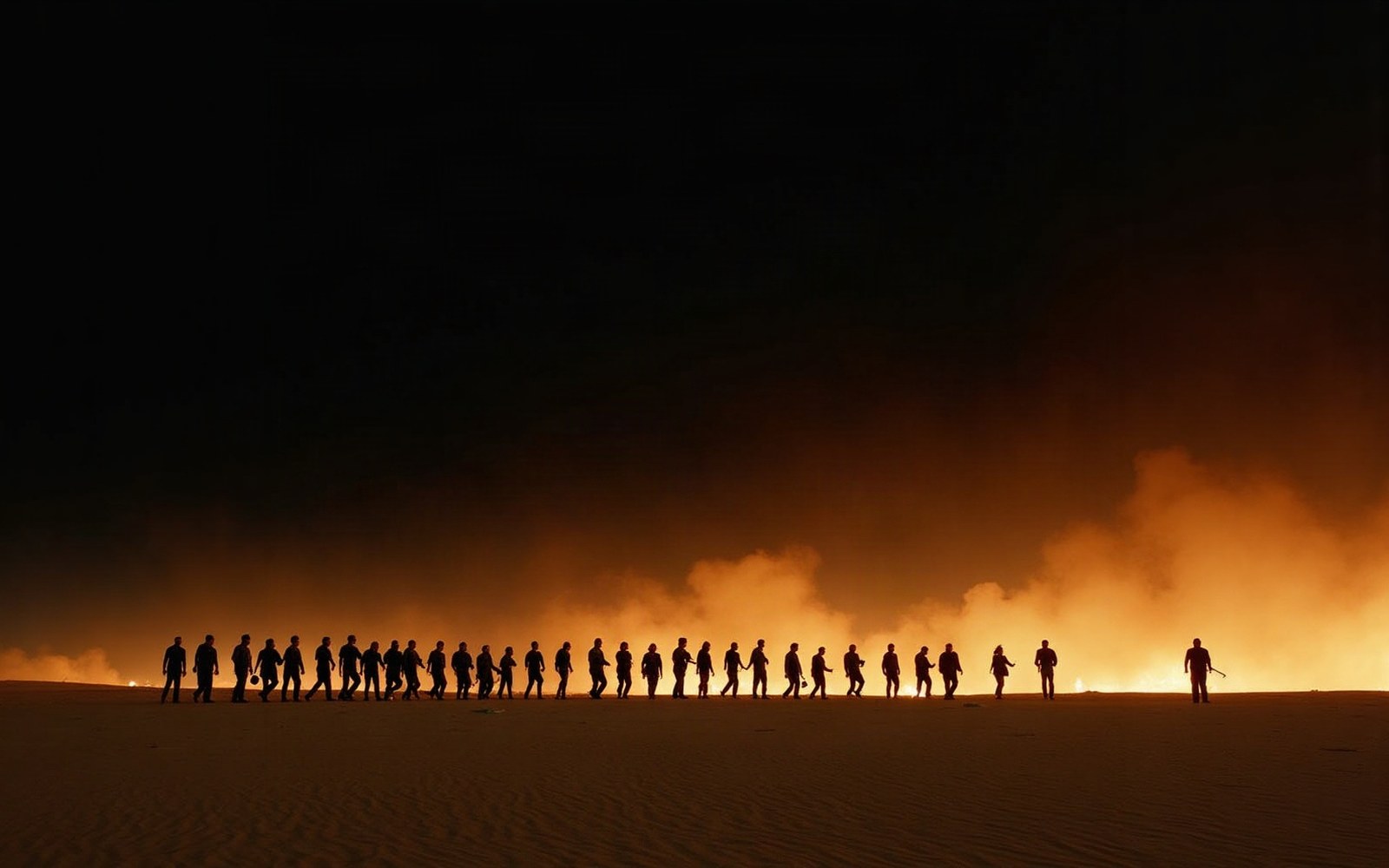
The sequence shows a Marine column advancing through darkness while oil falls as rain, the air already choked with smoke from the Kuwaiti oil fires — the approximately 600 wells ignited by retreating Iraqi forces in the closing days of February 1991. What that burning field actually looked like on the ground was documented in photographic and journalistic records from the Gulf: daylight turned black at noon across stretches of southern Kuwait, and the particulate fallout blackened skin and equipment within minutes. Mendes and Deakins were working from a historical event whose visual scale was almost impossible to believe without being there.
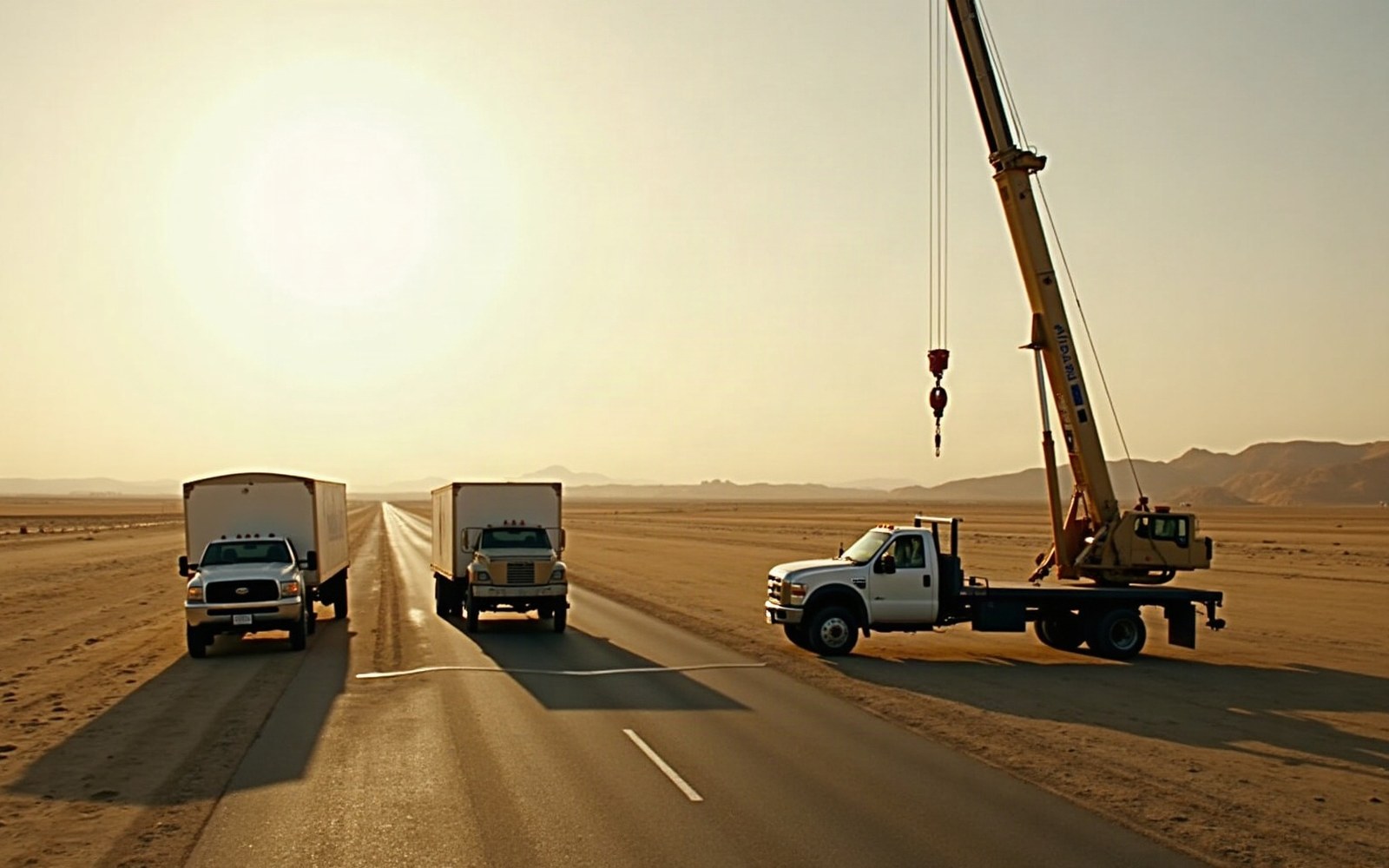
The production could not travel to Kuwait. The oil-fire exteriors were shot in the Imperial Valley — the Glamis and Brawley sites that doubled throughout for the desert operational environment — with the smoke and falling oil engineered by the effects crew on location. Practical oil rain of this kind requires a delivery system rigged above frame: perforated pipe runs fed by a pump, timed to drench the moving column evenly without creating the blotchy, stop-start appearance that reads immediately as a rigged effect on screen. The scale had to be wide enough for a marching unit, which meant scaffolding structures tall enough to clear the camera sightlines.
 03
03Deakins's exposure problem was acute. The scene is notionally night — or what passes for night when the sky is burning — but oil-rain itself is nearly black, and a marching column in dark utilities risks becoming an undifferentiated mass. His solution, consistent with the approach he applied across the oil-fire sequences, was to use the fires themselves as the primary light source: distant practical elements throwing amber from low angles, cutting across the column laterally rather than from above. That raking firelight gives each figure a lit edge on one side and leaves the other in genuine darkness, producing the sense of men moving through a hellscape rather than through a film set dressed to suggest one. A fuller reading of his exposure choices across these frames appears in the close analysis of six specific shots from the sequence.
The camera itself was held low and relatively wide, allowing the rain to fall through the frame from above rather than appearing as a scrim hung in front of the lens. That decision — camera below the fall line — is what keeps the oil rain legible as weather rather than effect. You see it arriving. The column moves through something, not past something.
The result holds up not because it exaggerates what happened in February 1991 but because it stays inside the historical record.