The Making
Glamis, Brawley, and a Mexicali Stand-In for Kuwait
The Imperial Valley gave Jarhead its desert. What the crew found there was harder to film, and harder to survive, than anyone had anticipated.
The Geography of Substitution
When Sam Mendes and producer Douglas Wick began scouting locations for Jarhead in 2004, the obvious logic pointed toward the American Southwest. Kuwait itself was inaccessible for a full Hollywood production, and the Kuwaiti landscape the film needed — flat sand sheets running to a burned horizon, oil-fire smoke hanging in columns above open ground — had to be recreated at scale. The Imperial Valley in Southern California, pressed up against the Mexican border, offered a corridor of terrain that could plausibly stand in for the Arabian Peninsula: enormous dune systems at Glamis, the agricultural flatlands near Brawley, and, across the border, the industrial outskirts of Mexicali.
The unit spent approximately four months shooting in and around these locations, a field commitment that shaped almost every department on the production. Roger Deakins, working with lenses chosen partly for the way they render the lateral shimmer of desert heat, had to calibrate his exposure strategy to the specific quality of light the Imperial Valley produces — a high, white noon glare that flattens shadow and bleaches colour in ways that soften on film differently from the Gulf's own latitude. What he and Mendes refused to do was correct for it in post.
 03
03Location by Location
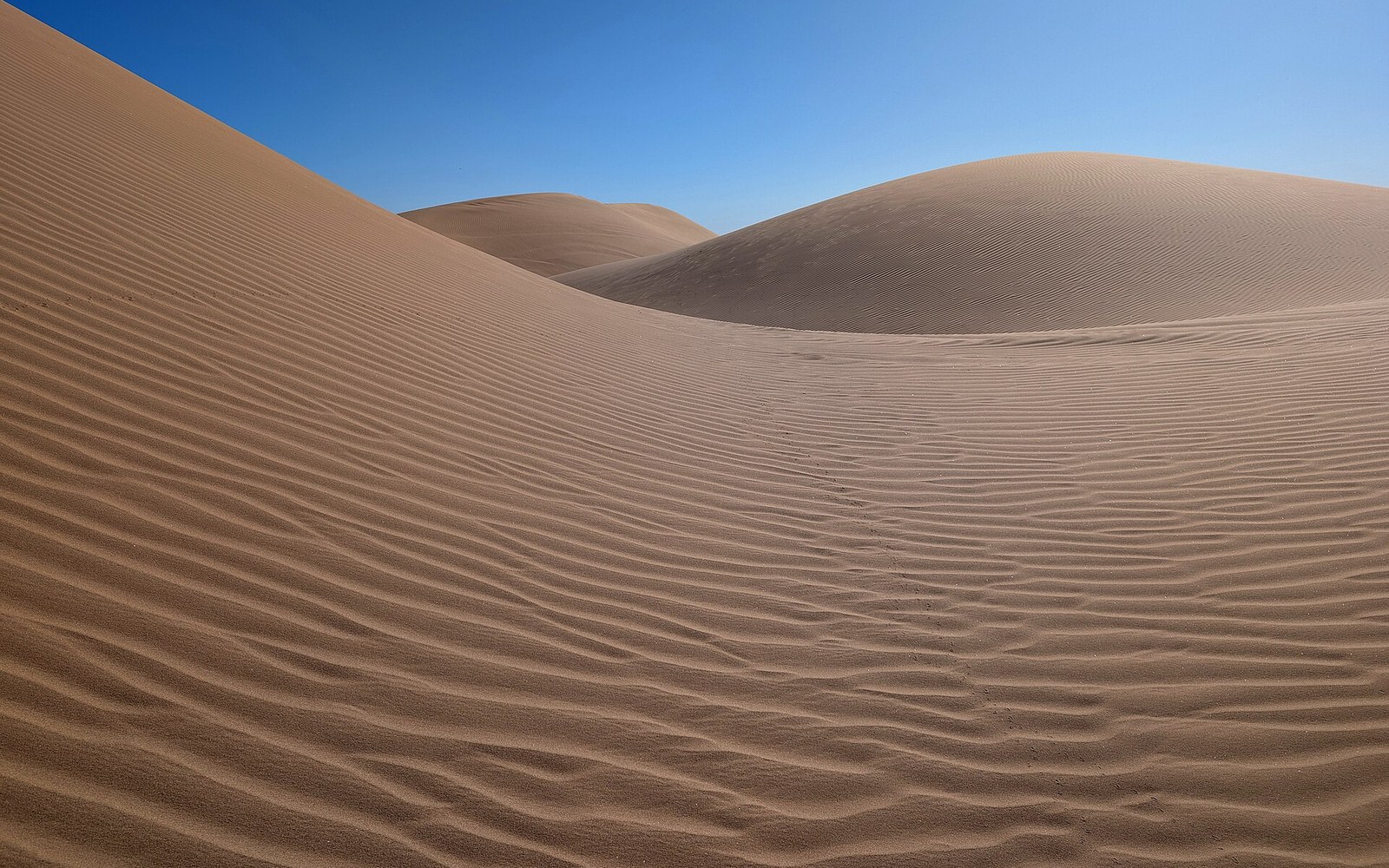
Glamis — a census-designated place in Imperial County, California, surrounded by the Imperial Sand Dunes — served the film's open-desert sequences. The Algodones Dunes, the largest dune system in the United States, provided the scale of empty terrain that the screenplay demanded for the Marines' initial arrival sequences and their long, purposeless patrols. The dunes run for roughly forty miles, and the production used their western stretches, where vehicle access was manageable and the horizon was sufficiently clean. Working on sand at that scale meant that equipment rigs could not be trucked to position; much of the camera and lighting equipment was moved by hand or by off-road support vehicle.
Brawley, a small city in the valley's agricultural belt, provided a different kind of location: hard-packed open ground that Dennis Gassner's production design team could dress to suggest the scraped desert floor of northern Kuwait. Gassner's department had the task of constructing the appearance of military infrastructure — tent cities, vehicle parks, command emplacements — across terrain that was essentially farmland lying fallow. The Brawley locations appear in the film's encampment sequences, where the visual language shifts from dune-swept to bleakly functional.
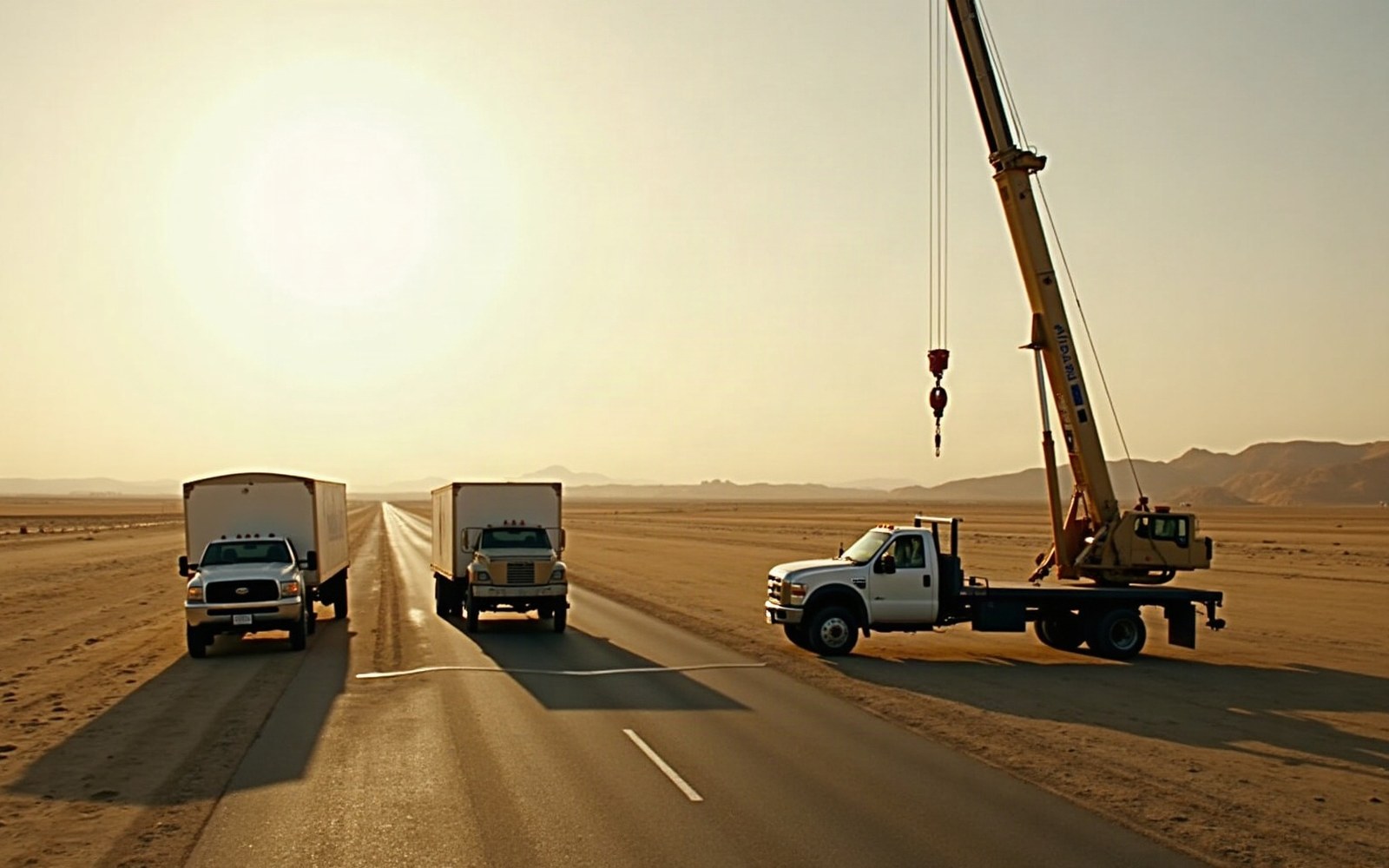
Mexicali, the Mexican border city directly south of Calexico, California, contributed sequences that required built industrial infrastructure as background. The oil infrastructure and storage environs on the Mexicali side of the border stood in for Kuwaiti oil-field facilities that the production could not otherwise approximate. Cross-border filming brought its own logistical demands — crew movement, equipment carnets, coordination with local authorities — but the existing industrial landscape was irreplaceable. No amount of production design could have built what was already standing there.
What the Terrain Cost
Four months in the Imperial Valley extracted a physical toll that production notes document in practical terms. Daytime temperatures during the summer shoot regularly exceeded 110 degrees Fahrenheit, placing every department under heat-management protocols. Cast members in desert camouflage pattern uniforms and MOPP suits — the full chemical-biological protection ensemble — were monitored by on-set medical staff during extended takes. Jake Gyllenhaal and the rest of the principal cast, who had undergone a preparatory training period before the shoot began, were working in conditions that the United States Marine Corps's own technical advisers confirmed were comparable to Gulf deployment conditions in terms of heat stress, if not duration.
The sand itself was a constant adversary for camera equipment. Anamorphic lenses carry large front elements with more surface area than spherical alternatives, and the Imperial Valley's fine particulate dust — carried on wind that crosses the dunes without interruption — required protective protocols between setups that slowed the shooting day. Deakins and his camera crew managed this by shortening the time equipment spent exposed between takes, a discipline that shaped the rhythm of the field unit throughout the location phase.
The locations are, ultimately, what make Jarhead feel inhabited rather than constructed. The heat and the scale were not production assets that could be fabricated; they were found, travelled to, and endured.